royalvisit

royalvisit

From SBF to the King: Who’s picking up the bill?

The 2022 royal visit had a wealthy crypto backer. Four years later, the public is still asking what King Charles’ visit will cost.

When Prince William and Kate visited the Bahamas in March 2022, the royal spectacle came with a reported $636,194 government budget. But behind the scenes, another source of money helped support the occasion, Sam Bankman-Fried, the then-billionaire founder of cryptocurrency exchange FTX whose headquarters was in the Bahamas.

FTX reportedly paid for the ballroom used for the royal reception. Bankman-Fried’s financial support for the event was not publicly disclosed at the time. His role offers a revealing backdrop to the renewed questions about who pays when royalty comes to the Bahamas.

Later in 2022, Bankman-Fried’s crypto empire collapsed, and he was arrested on fraud charges. His downfall transformed the image of a wealthy benefactor whose money had flowed into events and causes associated with the governing Progressive Liberal Party.

Now, with King Charles III visiting the Bahamas in October 2026, the question of royal spending has returned. But there is no Bankman-Fried to help underwrite the occasion.

Prime Minister Philip Davis appeared caught off guard when asked about the cost of the King’s visit on Wednesday.

“The dollar figure? I don’t know anything about that,” Davis said, before questioning why the reporter wanted to raise the issue and walking away.

Foreign Affairs Minister Fred Mitchell took a more defensive approach, insisting that the spending was justified.

“This is the king of the Bahamas who’s coming, so the spending is appropriate for that visit, and it’ll not break the bank,” Mitchell said.

Yet Mitchell could not provide a total cost or say whether the expenses had been itemised. Finance Minister Michael Halkitis had previously said agencies were still calculating the government’s contribution, with costs expected to be shared with the Sovereign Grant.

In 2022, the government eventually published a breakdown of its $636,194 budget. For the 2026 visit, the final public cost remains unclear.

The issue is whether the public should have to wait until after the pageantry to learn how much was spent, who contributed and what taxpayers ultimately paid.

Bankman-Fried’s role in the earlier visit also raises questions about the influence of private wealth in public affairs, particularly when donations and sponsorships are not publicly disclosed.

Royal visits may be ceremonial, but the money behind them is a matter of public accountability. The public deserves to see the numbers.

The King is coming. But what does that mean for the Bahamas?

King Charles III will arrive in the Bahamas today. But beyond the ceremony that comes with a royal visit such as the official welcome, the public engagements and the children greeting him, others gathering to catch a glimpse of the monarch, one question remains: why does an independent Bahamas still have a king?

The King’s visit offers a timely opportunity to examine what the Bahamas’ relationship with the King means today.

The Bahamas gained independence from Britain in July 1973. More than five decades later, it remains a constitutional monarchy, with Charles III serving as King of the Bahamas and head of state. The elected government, led by the Prime Minister, is responsible for governing the country, while the Governor-General performs the monarch’s constitutional functions locally. The King does not personally run the Bahamian government.

The Bahamas’ Independence does not mean the country has severed every constitutional tie to Britain. Instead, the country became a sovereign state while retaining the monarchy as part of its system of government.

For some, the monarchy represents tradition and a connection to the Commonwealth. For others, it raises questions about national identity, colonialism and whether the institution still reflects the aspirations of Bahamians today.

Those questions are especially relevant during this visit.

The King’s programme includes engagements focused on young people, national security, environmental conservation and Bahamian culture. These are important areas of national life, but the visit itself cannot resolve the challenges facing them. The value lies in what attention, dialogue or lasting cooperation may follow, not simply in the spectacle of the occasion.

There is also the question of history.

The Bahamas National Reparations Committee and other advocates have called for Britain to confront its role in the transatlantic slave trade, including demands for an apology and reparations. Reporting ahead of the visit indicates that the British government does not intend to offer a formal apology or financial reparations.

The King’s presence does not, by itself, answer those demands, nor does it settle the debate over the future of the monarchy.

What should the Bahamas expect from the institution it still recognises as head of state — and what relationship does the country want with that institution in the years ahead?

The royal visit will last only a few days, but the historical questions surrounding it will remain long after King Charles departs.


Davis and the King: Will he raise slavery to his face?

As King Charles III prepares to visit the Bahamas, calls for an apology for slavery and renewed discussions about reparations are gaining momentum across the Commonwealth. It is not known if Prime Minister Philip Davis too, will raise the issue directly with the monarch.

Commonwealth Secretary-General Shirley Ayorkor Botchwey has added her voice to those calling for an apology, saying it “wouldn’t hurt” and that “the time has come” for countries to discuss reparations.

In an interview with British media Sky News ahead of the King’s Caribbean tour, Botchwey said many Commonwealth countries had called for an apology. She argued that the form reparations should take—including financial support, concessional financing, climate-related assistance or the return of cultural artefacts, should be determined through discussions among countries.

This week, Guyana’s President, Dr Mohamed Irfaan Ali, has also urged Britain and Caribbean nations to move beyond acknowledgement towards meaningful action. He said an apology could help create an environment for open discussions, but should not be treated as the end of the process.

Ali has called for reparations discussions to address development gaps and inequalities linked to slavery, including through debt relief, development financing and investment in areas such as education and healthcare.

Where does Davis stand?

Davis has not publicly outlined whether he intends to raise slavery or reparations directly with King Charles during the Bahamas visit.

However, the Prime Minister previously called for a frank conversation about reparatory justice. Speaking to POLITICO during the 2024 Commonwealth Heads of Government Meeting, Davis said the transatlantic slave trade had inflicted a “horrendous impact” on the African diaspora and argued that the issue was about more than an apology or money.

He said it was also about recognising and understanding the lasting cultural, mental and physical harm experienced by the descendants of enslaved people.

At the time, then-British Prime Minister Keir Starmer acknowledged that slavery was “abhorrent” but said he preferred to focus on present-day challenges and future cooperation.

What could the King say?

Buckingham Palace has indicated that the royal family will not shy away from discussing Britain’s colonial past. However, the UK government has ruled out paying reparations, while a formal apology from the King is not expected during the tour. As a constitutional monarch, Charles acts on ministerial advice in matters of government policy.

The Bahamas National Reparations Committee has called on the Royal Family not to come “empty-handed,” renewing demands for an apology and reparatory justice.

Davis has welcomed the royal visit as an opportunity to showcase Bahamian culture and hospitality. Whether reparations will be part of his discussions with the King remains unclear.

King Charles won’t apologize for slavery during Bahamas visit — Palace says

As the Bahamas prepares to welcome King Charles III later this month, Buckingham Palace has made one thing clear: the King will not issue a formal apology for Britain’s role in the transatlantic slave trade, and no reparations will be offered during his Caribbean tour.

The announcement comes weeks after the Bahamas National Reparations Committee (BNRC) called on the British Royal Family not to arrive in the Bahamas “empty-handed,” demanding an apology for slavery and colonisation and renewed action on reparations.

King Charles is scheduled to visit The Bahamas from October 27–29, before travelling to Guyana and then joining Queen Camilla in Antigua and Barbuda for the Commonwealth Heads of Government Meeting.

The Palace says the King will not shy away from Britain’s history.

A Buckingham Palace spokesperson said there are important discussions taking place about the colonial legacy and the intergenerational impact of the transatlantic trade in enslaved people. The Palace also pointed to the King’s previous description of slavery as an “atrocity” that “forever stains our history.”

But there will be a limit to what Charles says or offers.

The Palace says apologies and reparations are matters for governments, while the British Government has maintained that financial reparations are not the answer. Foreign Secretary Ed Miliband recently reiterated that position.

That puts the King’s visit in an uncomfortable space.

The BNRC is asking for an apology and reparations and Britain is saying neither is coming.

And yet the King is not simply a foreign dignitary arriving in Nassau. He is King of The Bahamas and the country’s Head of State.

The Palace says the visit will focus primarily on the “vibrant present and promising future” of the countries Charles visits. But slavery, colonialism and reparations are already part of the conversation surrounding his arrival.

$636,000 for William and Kate. What happens when the King comes?

King Charles III is coming to the Bahamas, and before the red carpets are rolled out, there is a question that deserves an answer: How much will it cost us?

The last major royal visit provides a useful benchmark.

When Prince William and Catherine visited The Bahamas in March 2022, the government later reported preliminary spending of $636,194 on the visit. More than $566,000 went to New Providence businesses and vendors, while additional spending was recorded in Abaco and Grand Bahama. The government also highlighted the international media exposure generated by the visit.

CSJ Report also reported at the time that the government had purchased 40 new vehicles and rented five floors at Atlantis for the royal party and entourage.

Four years later, the circumstances are different. This time, a reigning King is coming.

Foreign Affairs Minister Fred Mitchell has indicated that the visit is expected to involve heightened security and strict protocol. But when asked about the cost, his response was striking.

“There’s no bill for our king.” He added: “Nothing too good for the king.”

But what does “no bill” actually mean?

There will inevitably be costs associated with security, transportation, protocol, government personnel, official events and preparations. Some expenses may also be absorbed by private companies or other public agencies.

The government does not necessarily have to prove that a royal visit is a bad investment.

It can argue that international exposure, diplomacy, tourism promotion and the prestige of hosting a head of state have value. In 2022, the government itself pointed to the more than 40 international media organisations that covered the visit and promoted the Bahamas internationally.

But if there is value, can we measure it?

How much will this visit cost? Who will pay? What will taxpayers provide? What will private businesses or donors contribute? And what tangible benefits will the Bahamas receive in return?

Taxpayers should know what it costs to host him.

In 2022, the public eventually got a number.

This time, perhaps the number should come before the King arrives, not months afterward.

Royal visit vs local reality: Will King Charles see the Bahamas Bahamians see?

When King Charles III arrives in the Bahamas this October, he will see a country preparing to welcome a monarch. But will he see the same Bahamas that Bahamians experience every day?

For some residents, the royal visit has already sparked a familiar joke: Perhaps the roads will finally get fixed and the lights will stay on—at least while the King is here.

The comments may be humorous, but they reveal something serious about how some Bahamians view their government’s priorities.

Shamere Castro wrote on Facebook: “Yayyyyyy. The roads will finally get paved and downtown might get a quick facelift.”

Carmon Newton asked: “Think the power might stay on for him & a few Roads get fixed?”

And Doyla Fox joked: “All roads his motorcade travels will be freshly paved.”

Because royal visits require extraordinary preparation. Security arrangements, motorcade routes, official venues and public appearances mean roads and public spaces along those routes receive heightened attention.

The Bahamas saw this kind of intense preparation during the March 2022 visit of Prince William and Catherine, when the couple travelled through New Providence, Abaco and Grand Bahama.

Now Charles is returning, this time as King.

And with him comes an interesting public expectation: that the country’s best face will be put forward for the monarch.

Why shouldn’t the best version of the Bahamas be good enough for Bahamians too?

A freshly paved road is still a freshly paved road after the motorcade leaves. A functioning electricity system benefits residents long after the royal delegation departs. A cleaner, better-maintained downtown benefits workers, businesses and visitors every day, not just a visiting head of state.

Of course, the King does not control BPL, road paving or Bahamian infrastructure. And there is no evidence that his visit itself will determine which roads are repaired or when.

But the jokes are revealing something worth paying attention to. They reflect a public perception that when important people come to town, things can suddenly happen faster.

Prince William and Kate Cost Bahamas Over $600,000 for 3 Day Visit

The royal visit to the Bahamas by the Duke and Duchess of Cambridge spurred controversy by some members of the public who debated the exorbitant price tag it will place on the tax payer’s purse.

Nearly two months after the March visit, the government released a preliminary financial expenditure statement on the visit. The Nassau Guardian revealed that the Bahamas government spent $636,194 on Prince William and wife Catherine Middleton during their visit to the Bahamas in March.

“The payments were managed by the Office of the Governor-General in consultation with the Secretariat,” the statement says.

It included:

  • $566,828.93 was paid to New Providence businesses and vendors
    • $34,657.30 on accommodations at Atlantis
    • $76,141.96 with Wild Flowers for decor for the royal ball, a school and One Montague
    • $66,440.50 with Movi Company for large jumbo screens and digital and electronic work at a school, the royal ball and regatta, among other expenses.
  • $50,063.92 was paid to Abaco vendors
  • $18,107.15 was paid to Grand Bahama vendors.

The government believed it saved $100,000 with “the assistance of corporate Bahamas [in] assisting with the Royal Black-Tie Ball,” the report says, while boasting of the media attention the country received during the visit.

“It is difficult to quantify the tremendous benefits of the royal visit to The Commonwealth of The Bahamas,” it states.

“Over 40 international media houses from the UK and international graced our shores and recorded the wonders of The Bahamas, its beauty, charm and warmth of our people.”

Prince William and Kate spent eight days visiting three Caribbean countries to mark Queen Elizabeth’s 70 years on the British Throne–Belize, Jamaica and the Bahamas.

The Bahamas was their last stop when they left New Providence and flew to Abaco and Grand Bahama.

CSJ Report revealed that the government purchased forty new cars for the visit and rented out five floors of Atlantis for the couple and its entourage.

Royal Couple Caught in Torrential Rain on Bahamas Tour as Protesters Demand Slavery Reparations

A heavy downpour was not the only occurrence to dampen Prince William and Kate’s Bahamas tour as they honor Queen Elizabeth’s 70 years on the British throne.

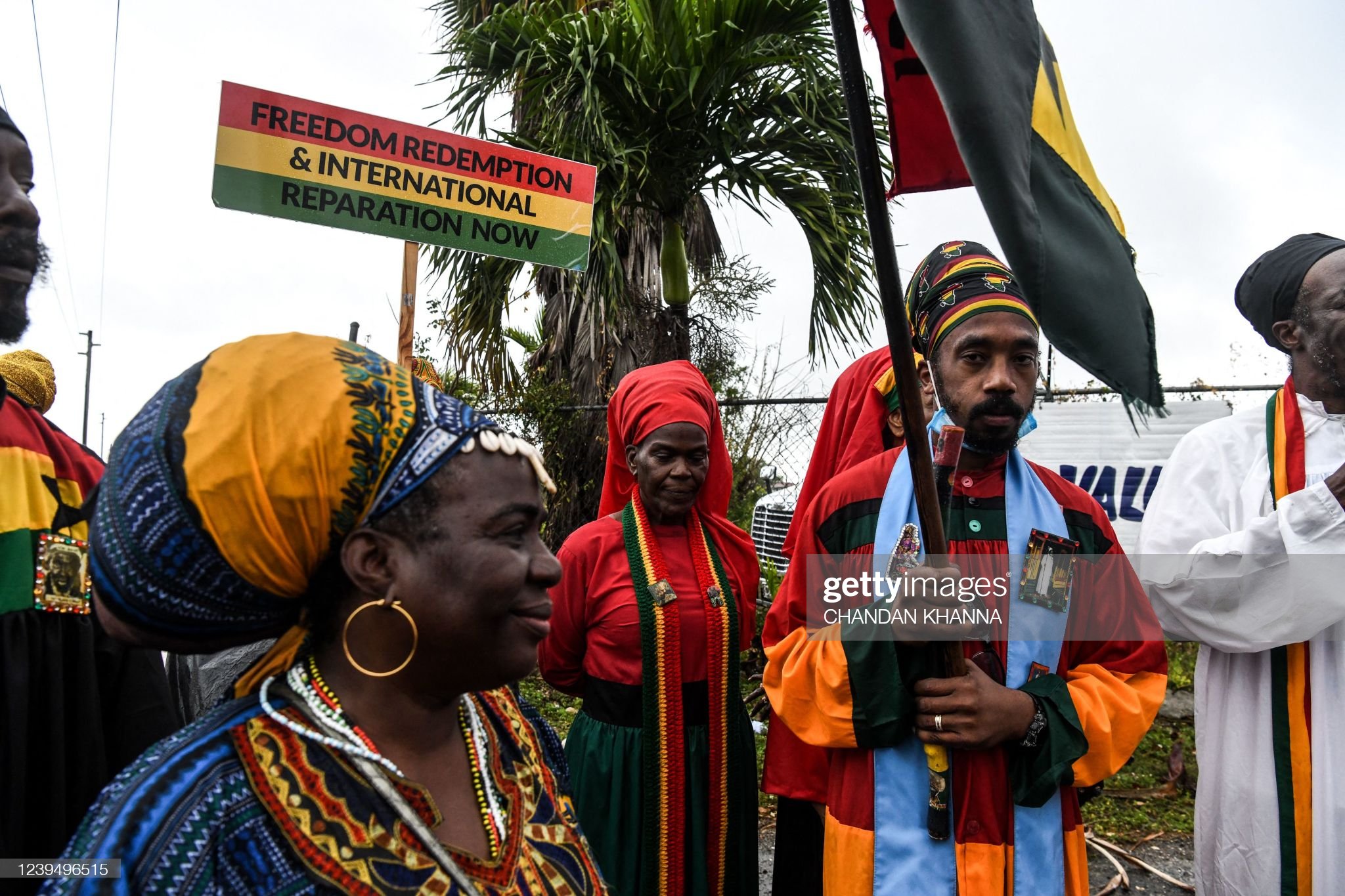
Rastafarians assembled near the Sybil Strachan School where the Duke and Duchess of Cambridge were to appear, protesting their visit and demanding reparations for the enslavement of African people.

Priest Marcus of the House of Rastafari in the Bahamas said, “The Bahamas is still under colonial rule and the Westminster system but we, as Rastas, don’t serve the system or the Queen. We can never forget slavery or the atrocities done to my people from the royal family,”

“We’re looking forward to an official apology and reparations—many Bahamians feel the same way. 400 years of slavery can’t be forgotten easily just like that; the damage has to be repaired.”

They were joined by a group representing abused women who sought to bring attention to their plight.

Both groups huddled together holding placards while singing songs.

As William and Kate appeared, the couple was met with torrents of rain using umbrellas to shield themselves from the downpour.


They were later escorted to Parliament Square to greet COVID-19 frontline workers. Though the rain held up for a brief period, it came down heavily as they greeted fans Down Town where a Junkanoo celebration was held.